
Hot weather affects elementary-age runners differently than teenage and adult runners. Children’s bodies aren’t able to cool themselves the same way as teen and adult bodies and can therefore become overheated much more quickly. The RRCA recommends that parents and youth running program leaders take the following precautions to ensure a fun and safe environment for kids to run.
As temperatures and humidity sore this weekend, RRCA recommends all running, youth and adults, take precautions to avoid heat related illness, which can cause death.
Be Prepared
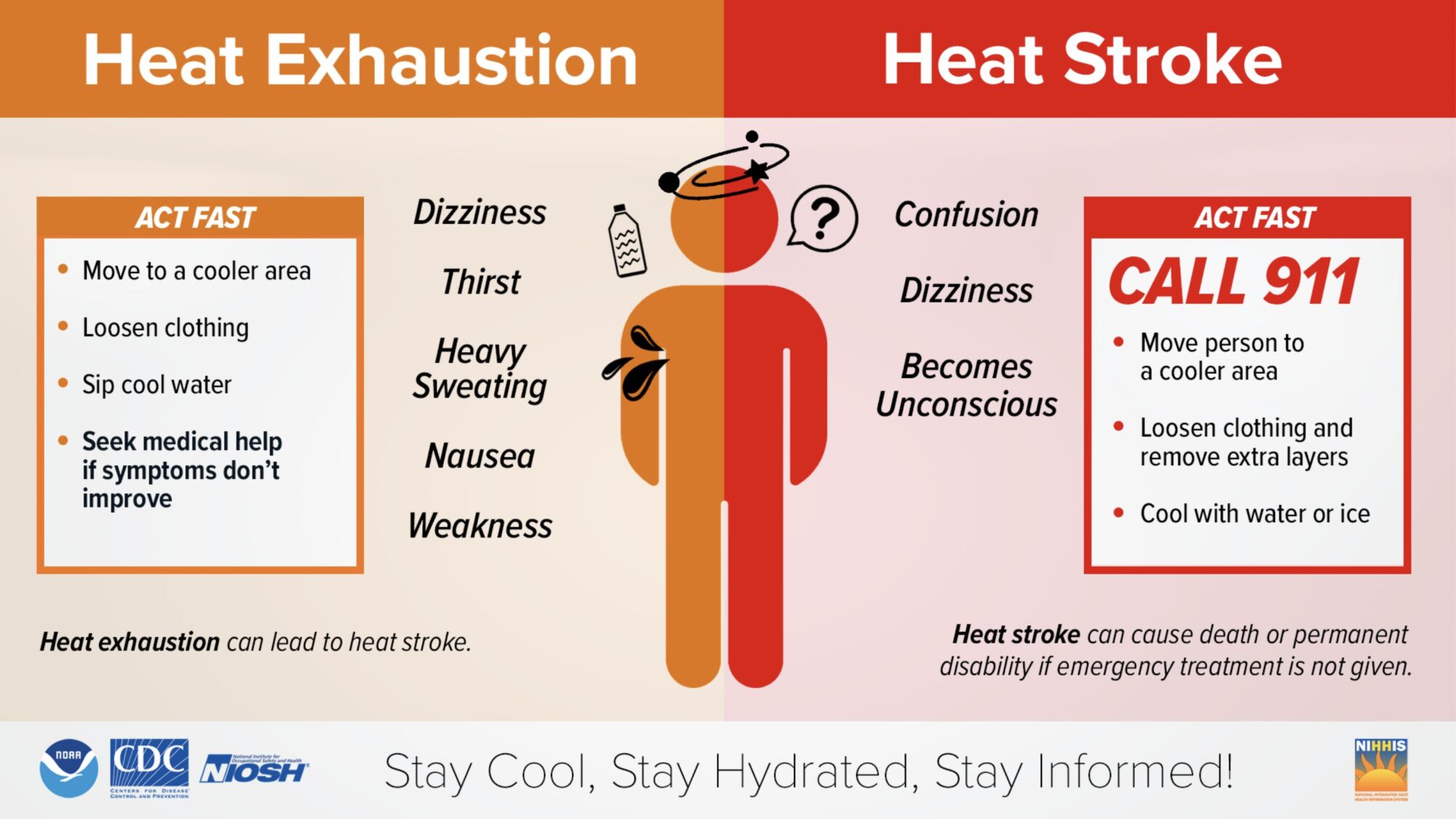
Know the symptoms of heat cramps, heat exhaustion, and heat stroke, how to treat each condition, and when to call 911.
Watch the Weather
High temperatures combined with humidity can create unsafe running conditions. Closely monitor both the air temperature and relative humidity and know the average ranges for your geographic area. The Wet Bulb Globe Temperature (WBGT) index is widely used by athletic organizations, the US military, OSHA and others to measure the safety of outdoor conditions. It’s a combined measurement of the air temperature, relative humidity, sun, and wind and can be estimated using an online calculator. Alternatively, you may consider using the Heat Index, which measures heat and humidity in the shade for adults.
We recommend following the Regional Heat Safety Threshold for Athletics in the US. The chart below outlines WBGT ranges for three categories of US geographic classifications (see map), and the recommended activity modification guidelines.
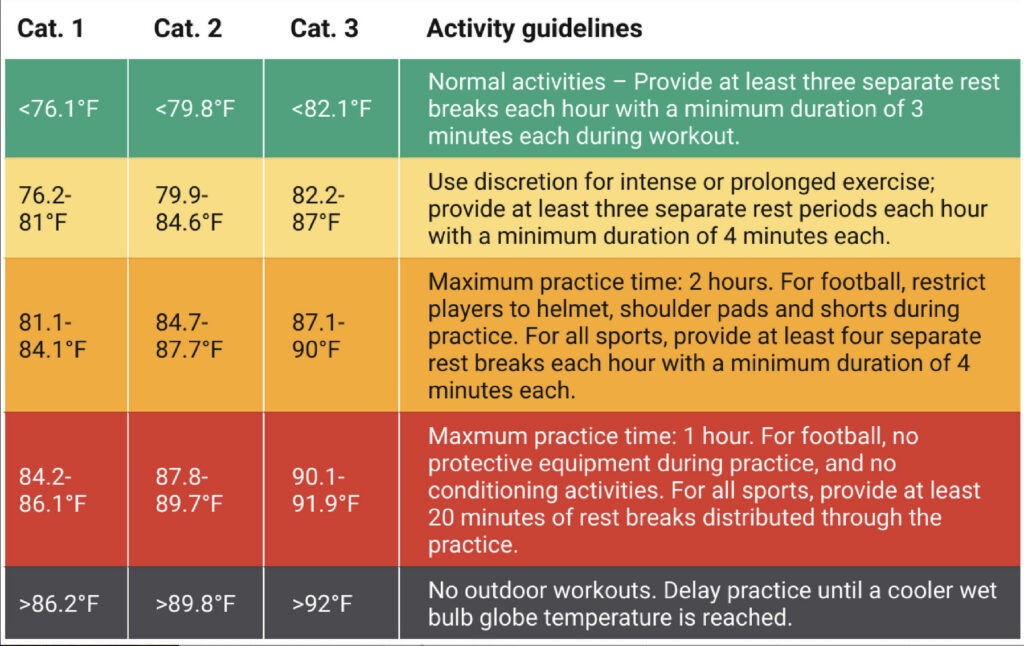

Consider setting detailed activity guidelines based on the WBGT or Heat Index for your area.
Acclimatize to the Heat
It takes time to get used to running in hot weather, especially in late spring and early summer as many areas see their first heat waves. Slowly increase run times and distances over the first 2-3 weeks of your running program to help kids’ bodies acclimatize safely.
Hydration
Understand that dehydration is cumulative, and staying hydrated is important throughout the day, not just during hot weather runs and other outdoor activities. Encourage kids to drink water throughout the day while at home or at school.
Youth programs should make unlimited water available, and young runners should be encouraged to take water breaks whenever needed. Schedule breaks every 15 minutes in the shade. When out on a longer run, consider having young runners carry a water bottle with them, or set up a water stop along the way.
Know the Signs of Heat Exhaustion & Stroke
Sources:
- https://www.cdc.gov/nceh/hsb/extreme/Heat_Illness/index.html
- https://www.hopkinsmedicine.org/health/wellness-and-prevention/heat-related-illness-and-young-athletes-3-important-things-parents-and-coaches-need-toknow
- https://www.osha.gov/heat-exposure/wbgt-calculator
- https://www.uiltexas.org/health/info/heat-stress-and-athletic-participation
- https://ksi.uconn.edu/prevention/wet-bulb-globe-temperature-monitoring/
- https://www.nata.org/sites/default/files/healthy-hydration-for-young-athletes.pdf